
Tear-off layers and disposal
Multiple layers, brittle tile, or heavy debris increases labor and hauling. A good estimate specifies how many layers are included and how disposal is handled.
Serving San Diego, California & surrounding areas
Mon–Sat · 7am–7pm
Get a clear, written estimate that matches your roof's size, slope, access, and material choice, with a realistic timeline for tear-off through final assessment.
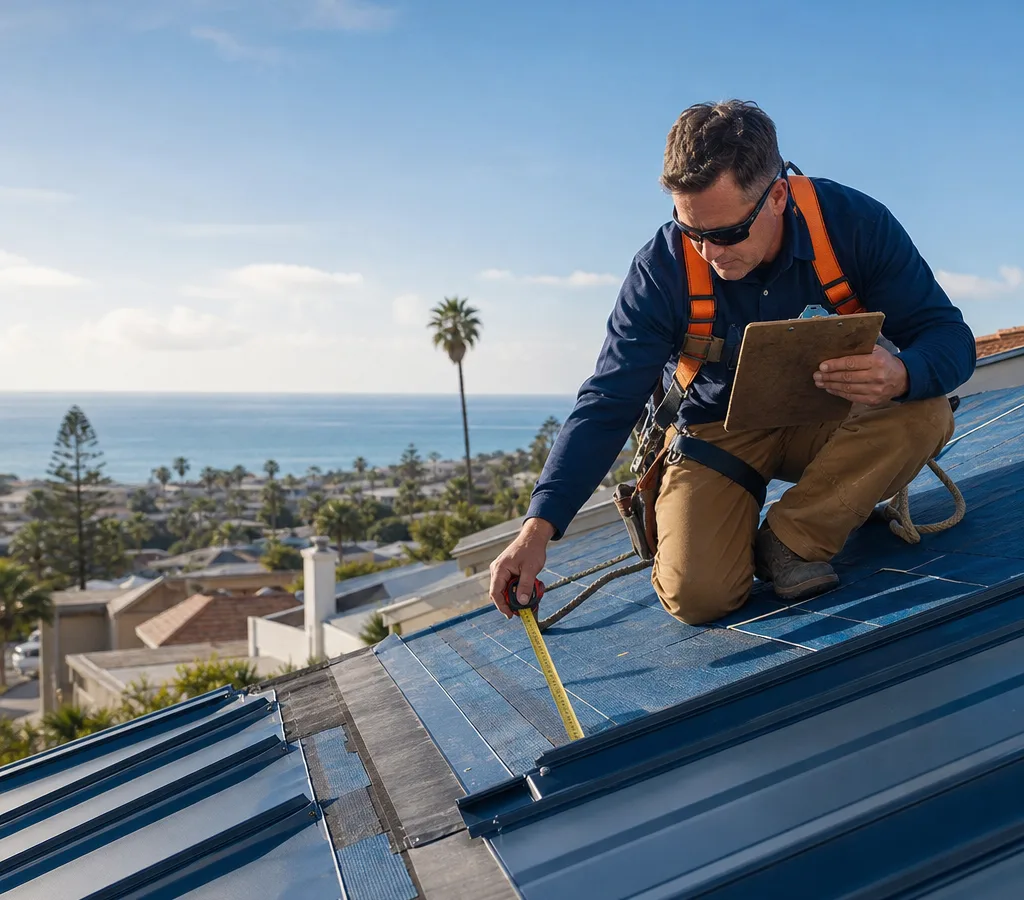
A comparable estimate accounts for roof scope, system details, site conditions, permitting, and any repairs discovered during tear-off.
If you are searching roof replacement cost San Diego, you are usually trying to answer two questions: what a realistic range looks like for your home, and what makes one quote higher than another. The fastest way to get clarity is to break pricing into scope—what is being replaced—system—what materials and details are used—and conditions—what we find once the old roof comes off.
San Diego homes present a wide mix of roof styles. Older neighborhoods like North Park often have steeper gables and tight driveway access that can add labor time and staging. Coastal areas like Point Loma commonly need extra attention on corrosion-resistant fasteners and flashing details because salty air accelerates wear on exposed metals. In hillier spots such as Clairemont and parts of Mission Hills, pitch and access can change how materials are loaded and how tear-off is managed. Those practical realities affect labor more than any marketing term.
You can also expect local permitting to matter on many replacements. When a permit is required, it adds coordination, documentation, and assessment timing. A responsible estimate should say whether permitting is included, what assumptions were made, and how change orders are handled if decking repairs or ventilation corrections are discovered during tear-off.
Metal Roofing San Diego CA focuses on written scopes that itemize the roof system rather than a single lump sum. That makes it easier to compare quotes on equal terms.
Roof replacement cost in San Diego typically ranges from about $12,000 to $35,000+ for many single-family homes, with smaller, straightforward roofs sometimes starting lower and complex tear-offs or premium systems running higher. As a quick tiering, an asphalt-shingle replacement is often the lowest-cost option, while metal roof systems and tile resets with repairs tend to price higher because of materials and detail work.
Your final price depends on roof square footage and pitch, number of penetrations such as vents and skylights, tear-off layers, decking repairs, access and staging, underlayment choice, ventilation upgrades, and the type of flashing and edge metals specified. The exact cost is confirmed after an on-site roof assessment and a written scope.
When a quote includes a metal roof system, the cost is driven by the system type and the detail package, not just the panels.
A complete metal roof replacement scope should clearly identify:
If two quotes are far apart, ask for the written differences in underlayment, flashing scope, and attachment details. Those items change long-term performance and are easy to hide in vague proposals.
If you want a quick overview of who you are hiring and what we do, start with Metal Roofing San Diego CA.
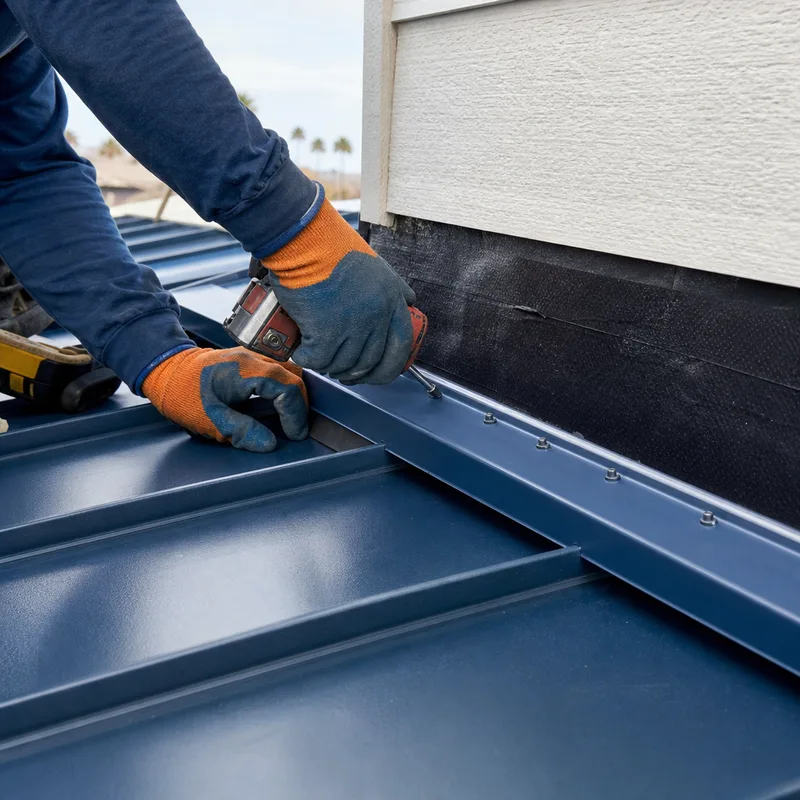
Multiple layers, brittle tile, or heavy debris increases labor and hauling. A good estimate specifies how many layers are included and how disposal is handled.
Plywood or plank decking repairs can change the price once the old roof is removed. We note visible warning signs up front and price repairs as an allowance or unit rate when appropriate.
Valleys, dormers, skylights, and lots of vents mean more cutting and flashing. Complexity raises the installed cost even when the roof is not large.
Steep slopes, limited driveway space, or landscaping constraints may require more staging and material handling time.
A replacement is often the practical moment to correct ventilation, edge metal, or flashing details to meet current standards and reduce heat and moisture problems.
Even with San Diego's mild climate, marine layer mornings and occasional rain events affect tear-off timing. A realistic plan includes dry-in steps and daily clean-up.
A defined sequence keeps measurements, assumptions, permitting, installation, and final documentation clear from the beginning.
We measure roof area, check pitch and access, note penetrations and transitions, and look for signs of trapped heat or moisture. We also review the existing roof type and any visible decking concerns.
You receive a scope that identifies the roof system, underlayment, flashing scope, ventilation plan, and what is included for tear-off and disposal. If something cannot be confirmed until tear-off, it is written as an allowance or unit-rate option.
When a permit is required, we coordinate the documents and align the schedule with assessment timing so the project does not stall mid-replacement.
We protect the property, remove the existing roofing, complete any approved decking repairs, then install underlayment, flashings, and the roof system. Daily site clean-up is part of a professional job.
We confirm the finish details around vents, edges, and transitions, then provide any warranty or product documentation that applies to your installed system.
“The estimate was the first one that actually spelled out underlayment, flashing work, and how decking repairs would be handled if they found issues. The final invoice matched the scope and the schedule was realistic.”
“We had quotes all over the place. Once we compared what was included for tear-off, edge metal, and ventilation, the numbers made sense and we felt comfortable moving forward.”
Share your address, roof type, and what you are considering, and we will inspect the roof and provide a clear scope with realistic options for budget and timeline.