
A written scope you can check
You should see exact tear-off limits, the insulation plan, attachment method, flashing approach, and how penetrations and roof edges will be handled. Vague proposals make change orders more likely.
Serving San Diego, California & surrounding areas
Mon–Sat · 7am–7pm
Get a clear scope, code-aware recommendations, and a workable schedule for active buildings. Our crews handle assessments, repairs, replacements, and planned maintenance for commercial roof systems across San Diego.
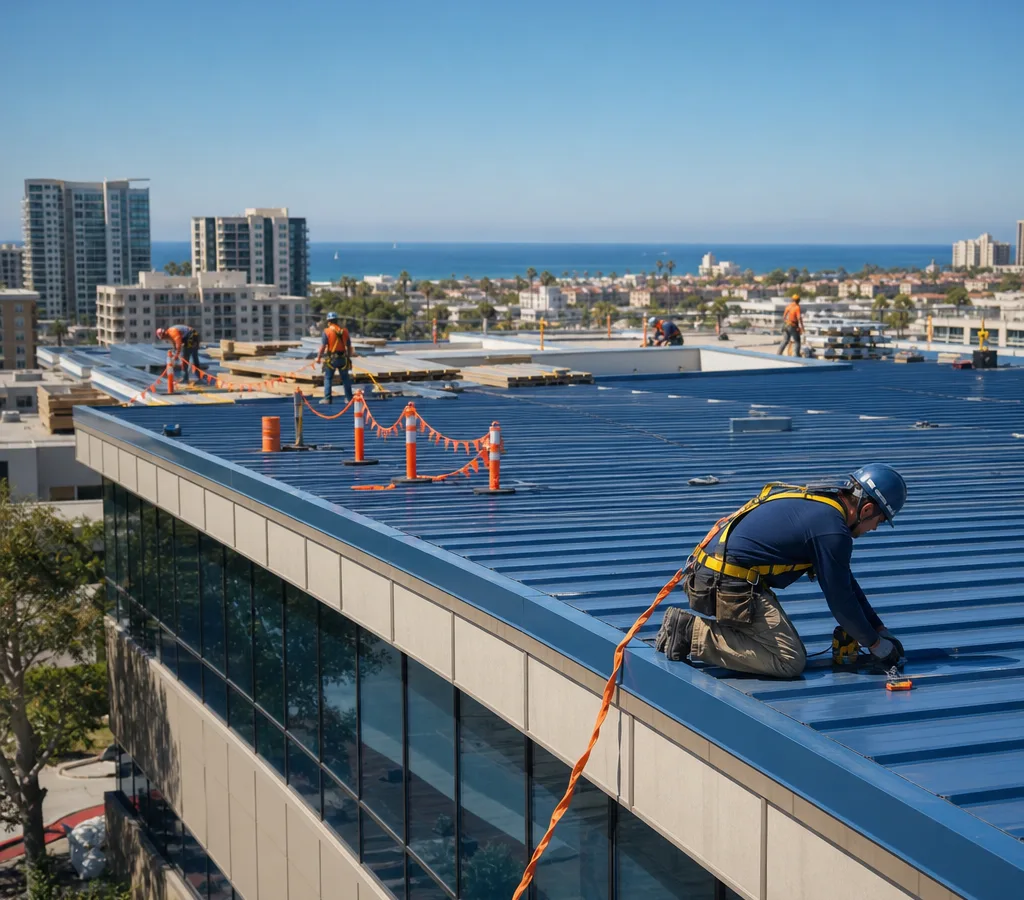
If you searched for San Diego commercial roofing contractors, you are probably comparing bids, trying to limit business disruption, and looking for a roof plan that holds up over time.
Commercial roofing is different from residential work. Roof areas are larger, access and staging matter, and many buildings have HVAC curbs, conduits, skylights, parapet walls, scuppers, and interior drains. A good contractor evaluates the roofing, insulation, flashing, drainage, and terminations before writing a scope specific enough to price and build.
Strong sun and daily temperature swings can accelerate aging on exposed membranes and sealants. Coastal air can be hard on fasteners and metal edge details. When winter storms arrive, weak drainage and poor flashing quickly show up as leaks.
Metal Roofing San Diego CA is based in San Diego. If you want a straight answer on repair versus replacement—and a bid explaining what gets removed, what stays, and how details are rebuilt around equipment and edges—start with an assessment and written plan.
You should see exact tear-off limits, the insulation plan, attachment method, flashing approach, and how penetrations and roof edges will be handled. Vague proposals make change orders more likely.
A real scope addresses ponding areas, interior drains and scuppers, overflow considerations, and how water is directed away from seams and terminations.
Expect a schedule that accounts for deliveries, noise windows, roof access, safety set-up, and daily clean-up. For retail and multi-tenant buildings, phasing often matters as much as the roofing.
Commercial roof systems must match the building use, slope, and deck type, with the right fire-rating and wind-resistance approach for the assembly. The contractor should explain the why, not just the what.
Ask what you receive at the end: photos, warranty paperwork when applicable, and a maintenance plan. Good documentation helps future facility staff and simplifies repairs.
Commercial roofing contractors in San Diego commonly encounter low-slope systems on warehouses, retail strips, medical offices, and light-industrial buildings. The right fix depends on the existing roof type, deck, and building use.
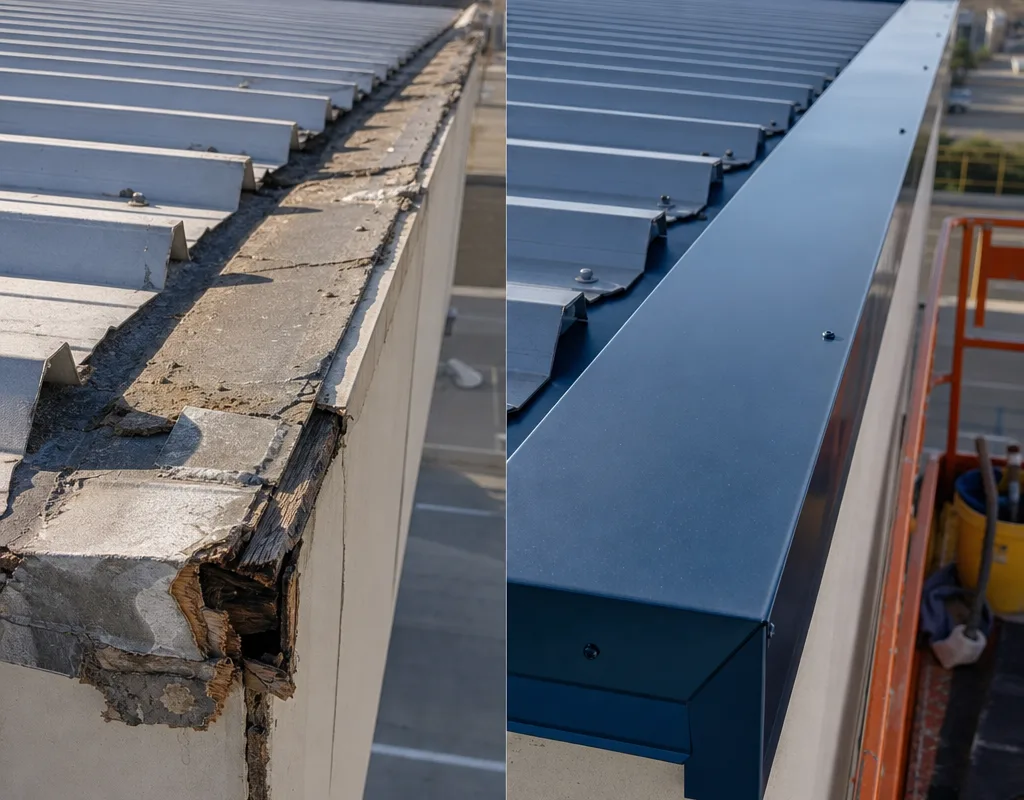
Most problems trace back to details rather than the field of the roof. Assessments focus on penetrations, perimeter metal, parapet transitions, drains and scuppers, rooftop unit curbs, and areas with past repairs.
Downtown and I-5 corridor roofs often have tighter staging and more equipment. Wide industrial roofs in Kearny Mesa and Miramar make expansion movement and fastening patterns important. In Pacific Beach and Point Loma, corrosion resistance and edge details deserve extra attention.
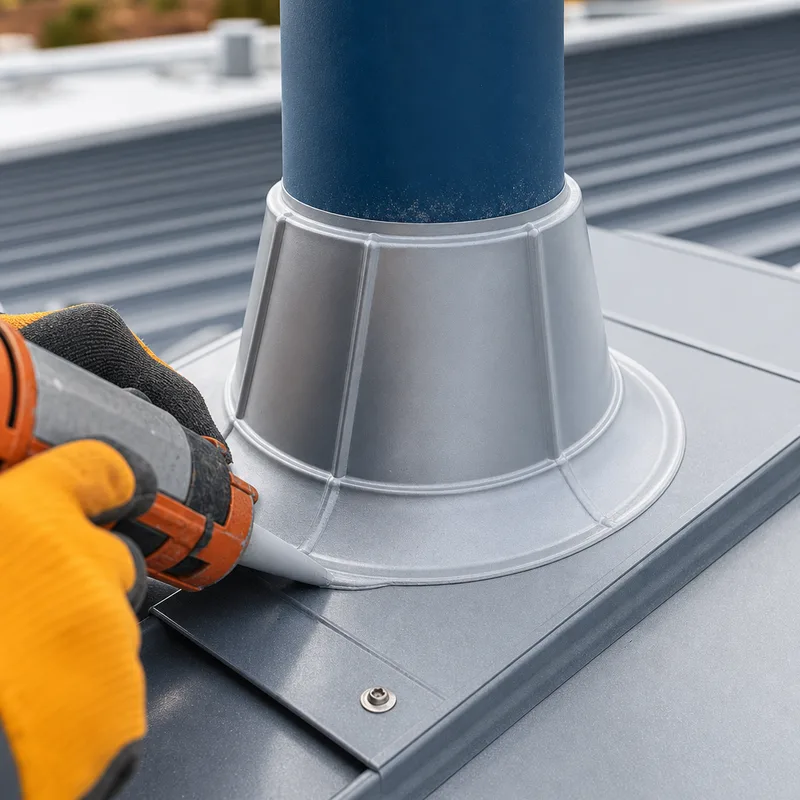
A documented sequence helps control access, disruption, roof details, and final closeout on active commercial properties.
We walk the roof, review drainage patterns, check terminations and penetrations, and look for movement, moisture signs, and prior patching. For active leaks, we isolate the entry point rather than guessing from interior stains.
You get repair, restoration, or replacement options when they make sense. Each option states what is included, excluded, and assumed about existing layers and deck conditions.
We plan staging, access, and noise-sensitive tasks around tenants, store hours, deliveries, and critical equipment. Larger roofs can be phased to keep areas open.
Crews keep walk paths clear, secure materials, and protect the building below. We verify details as work progresses because edge and penetration work is where long-term performance is won or lost.
We review completed areas, confirm drainage flow, and provide closeout documentation relevant to the scope. When appropriate, we outline seasonal and post-storm maintenance checks.
Commercial roofing work in San Diego typically ranges from about $1,500 to $8,000 for many repair scopes. Partial and full replacements more often land around $8 to $25+ per square foot, depending on the system, tear-off, and insulation. Large or complex projects can run higher.
Price depends on roof size and height, access and staging, penetrations and rooftop units, existing layers, wet insulation, deck condition, and the specified system—including edge metal and flashing. Exact cost is confirmed after an on-site assessment and written scope.
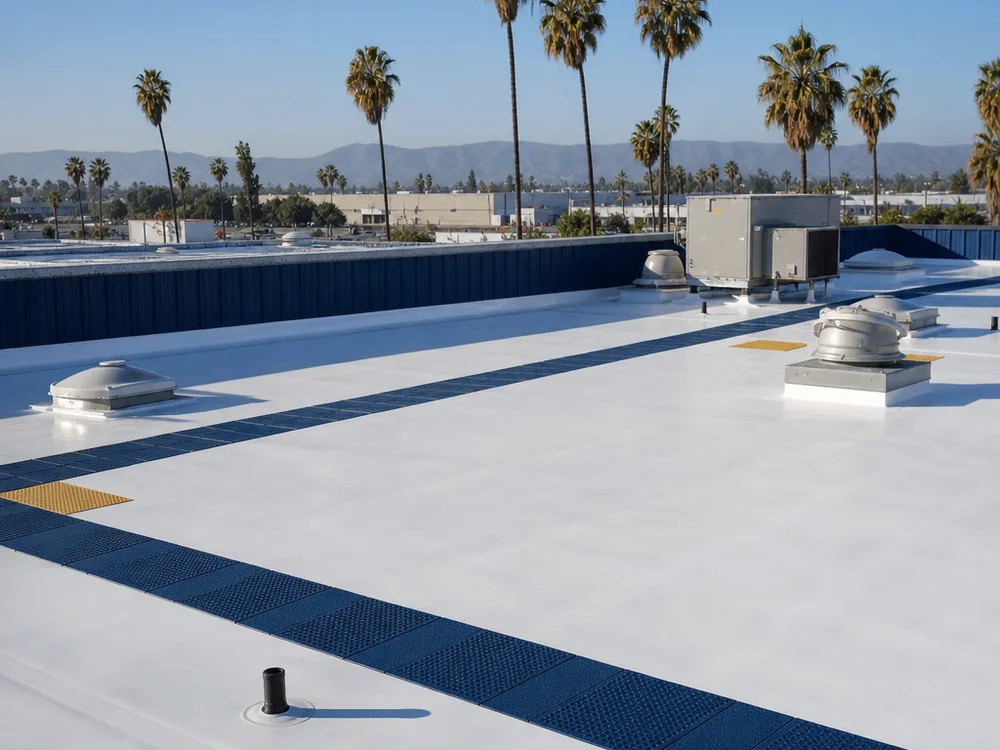
“The proposal spelled out exactly what was being repaired and what details were being rebuilt around the curbs and drains. The crew stayed organized on the roof and kept the tenants informed about noise windows.”
“We had recurring leaks during storms. They traced the water path to flashing issues at the perimeter instead of just patching the stain location. It has held up since.”
Tell us what kind of building you manage and what you are seeing on the roof. We will inspect the system, explain repair versus replacement options, and provide a written scope with a realistic schedule for your San Diego property.